
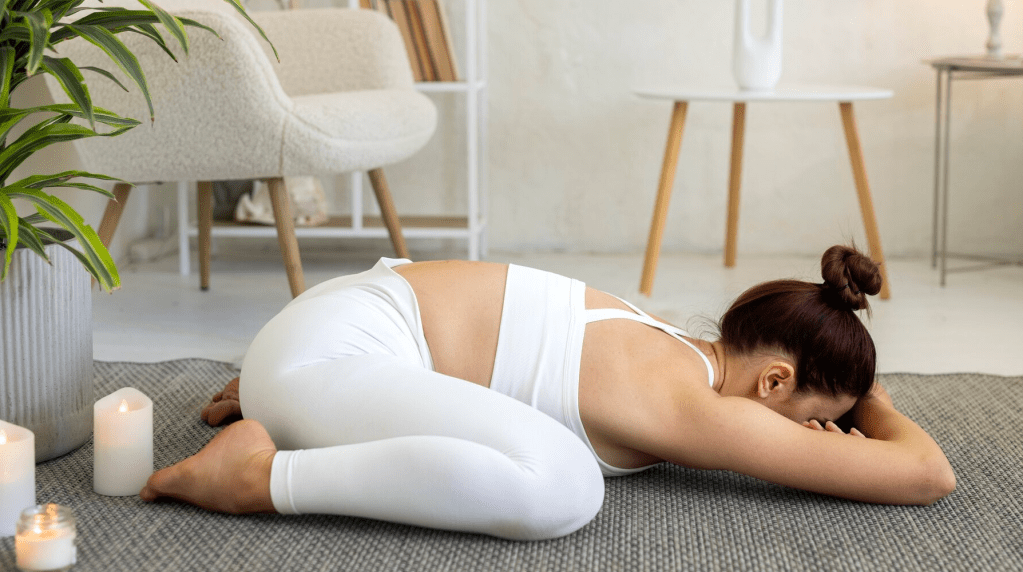
Written by Dr. Kat Hamblin
I didn’t begin climbing until the age of 35. After moving to Chattanooga, TN and making a bunch of climber friends, I thought I would just jump on the bandwagon, hang out with my friends, and get stronger. I had no idea what I was signing up for. I like to say now that I don’t consider rock climbing a sport – it’s a journey. It has offered me so many life lessons and continues to humble, challenge, and inspire me. When I began writing this article, I was flabbergasted at the lack of information for pregnant climbers; although, I shouldn’t really have been surprised considering the history of rock climbing as a male-dominated sport and the general lack of education and information on pregnant women and their bodies. As a pelvic floor physical therapist and climber, here is my best attempt at sharing all the scientific research, thoughts on biomechanics, pelvic floor education, exercise, and mindset shifts I can offer.
Disclaimer – This guide is written from my professional knowledge as a physical therapist. As a woman and a climber, I know that it is frustrating to encounter a lack of information when it comes to what is considered safe during pregnancy. Pregnant women are not often included in scientific trials because of the potential risk to the fetus, so unfortunately there is not a lot of information around what is safe. What we are left with is a discussion on the possibility of risk. This article is for education, not medical recommendation. My hope is that the information presented here, along with the input from the community on this site, will give you direction and confidence to make the best decision for you.
I. EXERCISE
First let’s talk about exercise and pregnancy. Exercise at moderate levels during pregnancy has been shown to have benefits for both mom and baby. This includes a reduced risk of Cesarean delivery, aids in managing gestational diabetes, and can help with managing the expected fluctuation of weight gain. There are conditions that make exercise unsafe, so please make sure you are cleared by your healthcare provider and check out this information from the American College of Obstetrics and Gynecology.
In practical terms, “moderate” level of intensity means doing 30 minutes of aerobic activity 5 days a week. At this level, you would rate how hard you are working (on a scale of 0 to 10) at 3-4. You should be able to carry on a conversation, but not be able to sing. Examples of aerobic activities include fast walking, jogging, swimming, hiking, biking, and dancing.
Does climbing count as aerobic activity?
So is climbing aerobic, meaning oxygen is able to be delivered to large muscle groups? That’s a good question. As you know, there are many different types of climbing, but in general climbing cycles between aerobic and anaerobic. (Anaerobic = “without oxygen,” think about how you feel when you are holding tension through your whole body on the wall.) Doing any activity where your heart rate is increased for more than a few minutes is aerobic. Bouldering, especially shorter routes, is more anaerobic, while rope climbing, especially longer routes, are more aerobic with some anaerobic components.
If you want to use climbing as your cardio during pregnancy, I would consider doing ropes because you can get longer periods of time where your heart rate is elevated. Sessions should be at least 30 minutes, probably more to account for rest. If you can climb 5 days a week, that’s great. For the rest of us still building up our upper bodies and skin, think about other activities you enjoy that you can alternate climbing with.
Signs you should stop exercising
If you experience any of these things, you should stop and call your OB/midwife.
- Bleeding from the vagina
- Feeling dizzy or faint
- Shortness of breath before starting exercise
- Chest pain
- Headache
- Muscle weakness
- Calf pain or swelling
- Regular, painful contractions of the uterus
- Fluid gushing or leaking from the vagina
II. PHYSICAL CHANGES IN YOUR BODY
Obviously your body is changing in many different ways in order to account for your budding babes and to prepare you for delivery. Here are the changes that are going to affect your climbing:
- Feeling out of breath: Especially in the first trimester, your body is changing your respiratory system to take in more oxygen, creating more blood volume, and producing hormones that can cause you to feel out of breath. This is completely normal. Remember to use the exertion scale above (3 to 4 out of 10) or the talking scale to rate how hard you are working.
- Center of gravity shifts: As your abdomen expands, your center of gravity shifts forward. Your body compensates for this by making several postural adjustments. Unfortunately these adjustments tend to decrease the ability of your core muscles to contract. However, your core is not the only muscle or way you can generate body tension with climbing. While I do think that it benefits pregnant women to train their core and pelvic floor for birth and beyond, you do not have to solely focus on this as a part of your climbing goals.
- If you are interested in core and pelvic floor strengthening while pregnant there are many good programs you can do online or find an in-person professional like a pelvic floor physical therapist.
- Diastasis recti: This is the expected split in the rectus abdominis muscle (aka your “abs”). As the abdomen expands during pregnancy, the separation causes the muscles to have a harder time contracting. You may be able to see visible “doming” when you contract your abs. Again, this is not your only core muscle or your only way of producing body tension while climbing. However, this is going to make certain moves like campusing more likely to increase that separation. (Note: There are ways to decrease the amount of separation and improve the amount of tension in your ab muscles, it may benefit you to do some training on how to do this with a trained professional.)
- Hormones: Because of the increase in the hormone relaxin and other pregnancy hormones, women develop some joint laxity in order to help create room for baby and assist with delivery. The increase in laxity can make you more prone to injury as well as produce some pain, especially in the third trimester. This is not to scare you, but to inform you these things may happen.
- Back, hip, and pelvic pain: Changes in your joints and your hormones makes you a little more flexible which can produce pain, especially further into pregnancy and when you are at the limits of your flexibility. There are a few things you can do to help with this (see below), but if you are feeling pain when climbing you should stop and try something easier that does not cause pain.
- See a PT for strengthening exercises – strengthening will help support your muscles, tendons, and joints that are a little looser now
- Consider using a pregnancy belt to help support your belly and relieve pressure. Here is an example of one.
- Changes in foot volume: Since your blood volume has increased and the joints in your feet are more relaxed, you may find that your climbing shoes don’t fit and you need a bigger size.
- Increase in weight: It’s totally normal to expect weight gain during pregnancy and this will have an obvious impact on your climbing as you have more to move!
III. YOUR PELVIC FLOOR
What is your pelvic floor?
Your pelvic floor is the layer of muscles that sits between your hip bones at the bottom of your pelvis. It forms a bowl shape and helps support the organs that sit within it. Your rectum, bladder, and vagina all pass through the layers of muscle, so symptoms like painful sex, urinary leaking, and constipation can all be associated with issues with these muscles.
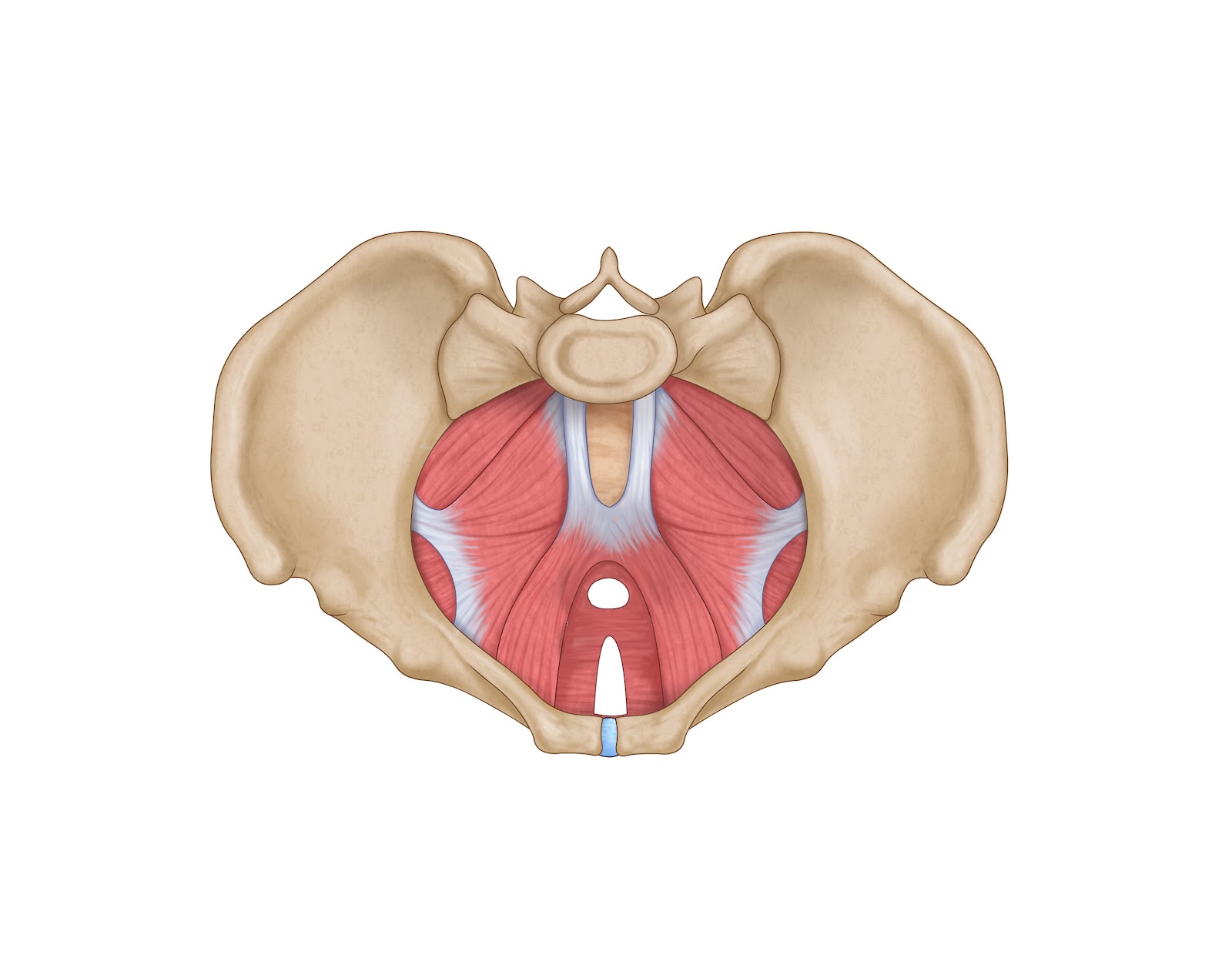
The pelvic floor is also a part of your core muscles, as it makes up the bottom of the cylinder of your trunk. This is important for generating strength and managing pressure, and for delivering babies. When you’re pregnant, you have more weight pushing down on your pelvic floor. This can be an uncomfortable sensation and contribute to things like constipation. Additionally, the muscles of the pelvic floor do not contract to push out your baby during delivery (your uterus does that), but they do lengthen and relax in order to let baby out. As a pelvic floor therapist, I always teach women how to do three essential things with their pelvic floor:
- Contract (kegel) for strengthening, for being able to lift and support increased weight
- Relax to let go of tension and help generate more strength
- Lengthen or bulge for bearing down and allowing things out (poop and babies, sorry to put those things together)
Pelvic floor and climbing tips
Since the pelvic floor is a part of your core muscles, you can engage this baby while performing movements that require a lot of exertion.
- Try to exhale and lift when you are making a move rather than holding your breath, your pelvic floor naturally lifts during your exhale
- If you are concerned about diastasis recti, try sticking to more vertical or slightly overhung routes as this will put less tension through your abdomen
- You can also practice activating your pelvic floor and “deep core” or transverse abdominus muscle to help tension your ab muscles with movement.
- If you are experiencing urinary leaking (which is very common during pregnancy) when you are climbing, laughing or sneezing, try doing a pelvic floor contraction before in order to tighten up these muscles and help hold urine in.
Finding and working with a pelvic floor physical therapist is an excellent way to prepare your pelvic floor for birth and beyond by learning about your anatomy, strategies for birth, and pelvic floor movement. Having a baby is a major physical event and you deserve an individualized assessment to figure out what is right for your body!
IV. CLIMBING AND PREGNANCY
There is a lot of controversy over this topic. And there have been some amazing women in the field who have advocated for women to continue climbing for their bodies, mental health, and personal identities. In general, there seems to be a consensus that most medical providers err on the side of caution. Considering the lack of scientific research on the topic, this has to be balanced with the experiences of women themselves. To date there have been two research studies that focused on climbing and pregnancy.
- The first was a survey study study done in 2015, it found that climbers tended to have pregnancies with lower rates of gestational diabetes and pre-eclampsia (high blood pressure). They also found that, on average women reported “limiting” their climbing at 20 weeks and stopping climbing at 31 weeks. The survey did not gather data about why women stopped climbing, but it may have been a combination of risk and physical discomfort. This is simply an average number and not a recommendation for what is right for you.
- The second study in 2017 found that there was no significantly higher proportion of preterm births in women who sport climbed compared to the national average.
Overall, your body is undergoing some incredible changes to do an amazing thing that no one else can do: create and bring your baby, a new life, into this world. As you get further along in your pregnancy, climbing will become harder for physiologic reasons. Please know, this is a temporary season. Focus on what is in your control (maintaining fitness, forearm/wrist/hand strength, preparing pelvic floor, supporting your mental health) and let the rest go. The most important thing you can do is listen to your body, educate yourself, tap into your community, and make decisions that are best for you. If you need more guidance on this, I would love to support you! You can find my business here.
V. MINDSET SHIFTS
Allow yourself to grieve
Pregnancy is a physical, emotional, and spiritual transformation. You are becoming a new person. That may mean grieving the loss of the old version of you. Climbing can and will still be a part of your new life, but it may look different for a period of time. It’s okay to be sad that your life is changing, even if you are excited for those changes.
Listen to yourself
If you want, this can be a time to deepen your connection with your body, how it feels and how it responds to things. Maybe the stress of falling is too much for you and you don’t want to take any risk, that is totally OK. Maybe you are super confident and trust yourself to know that you will only climb what you consider safe. That’s all wonderful. Honor how you feel.
Stay open to new lessons
It can be an amazing gift to go back and work on the foundation of your climbing, including your technique, your strength, and how you build and maintain tension during climb so you can actually become a better climber. Maybe it’s an opportunity to deepen your joy for the sport, not just the sends, but the flow as well.
AUTHOR BIO
Dr. Kat Hamblin is a physical therapist specializing in pelvic floor physical therapy. She moved to Chattanooga in 2023 and hasn’t looked back. She opened her own holistic pelvic floor practice, Grounded PT, with a dream to help women learn more about their bodies so they can enjoy new levels of connection and health. She also enjoys bouldering, being outside, and crafting.
 Baby Beta
Leave a comment